
Gujarat High Court on Hindu Marriage Registration Rules
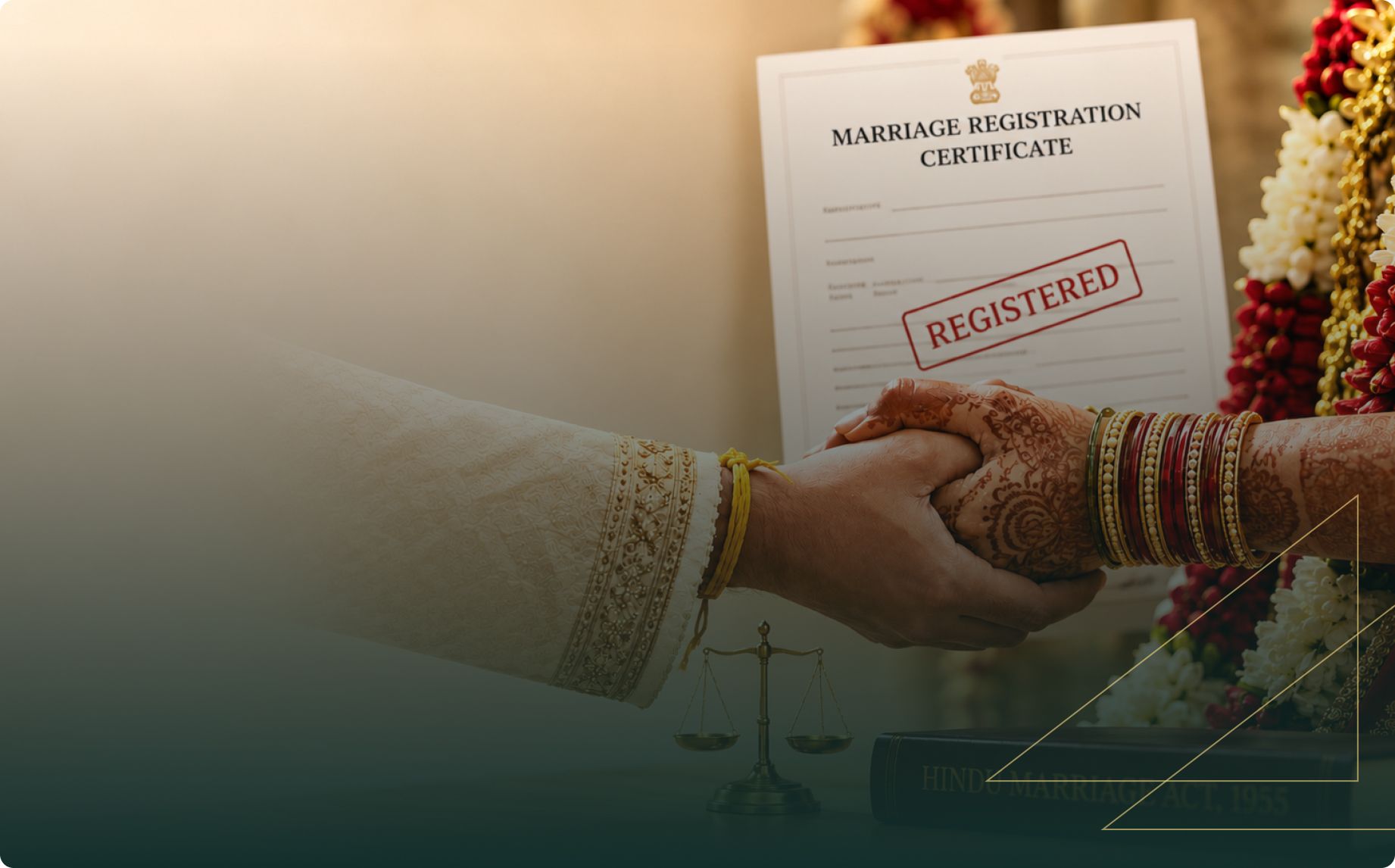
Is registration enough for a Hindu marriage? A Gujarat High Court ruling says no. Learn why rites matter for legal validity. Read the full case details here.
We often assume that once a marriage is registered and a marriage certificate is issued, the marriage is legally valid.
However, under Hindu law, that is not always the case.
In a recent decision, the Gujarat High Court held that a marriage certificate, by itself, cannot validate a Hindu marriage if the essential rites and ceremonies prescribed by law have not been performed.
In other words, registration cannot substitute a valid solemnization of marriage.
The Court based its decision on Section 7 of the Hindu Marriage Act, 1955 , which prescribes the ceremonies for a Hindu marriage.
The provision states that: A Hindu marriage may be solemnized in accordance with the customary rites and ceremonies of either party.
Where such rites and ceremonies include Saptapadi - the bride and groom jointly taking seven steps before the sacred fire the marriage becomes complete and legally binding only upon the seventh step.
In the case before the Gujarat High Court, although the parties had obtained a marriage registration certificate, there was no evidence that the essential Hindu marriage ceremonies had been performed.
The Court therefore held that registration cannot validate a Hindu marriage where the requirements of Section 7 have not been fulfilled.
Why This Matters This decision goes beyond matrimonial law.
The legal validity of marriage is the foundation for several statutory rights and can directly impact: inheritance and succession rights; a spouse's right to inherit the deceased's estate; maintenance and other matrimonial remedies; pension, insurance and other spousal benefits; and other legal rights available only to a legally recognized spouse.
For instance, before deciding whether a person is entitled to inherit as a surviving spouse, a court may first have to determine whether there was a legally valid marriage.
The ruling is a reminder that a marriage certificate is evidence of a marriage it does not, by itself, make the marriage legally valid.
For Hindus, legal validity depends on compliance with Section 7 of the Hindu Marriage Act.
What may appear to be a procedural requirement can ultimately determine a person's marital status and significantly affect inheritance, succession, and other legal rights.
Reference:<https://www.livelaw.in/high-court/gujarat-high-court/gujarat-high-court-hindu-marriage-rites-ceremonies-performance-saptapadi-valid-539336